Latest

  • OpenAI DevDay 2026

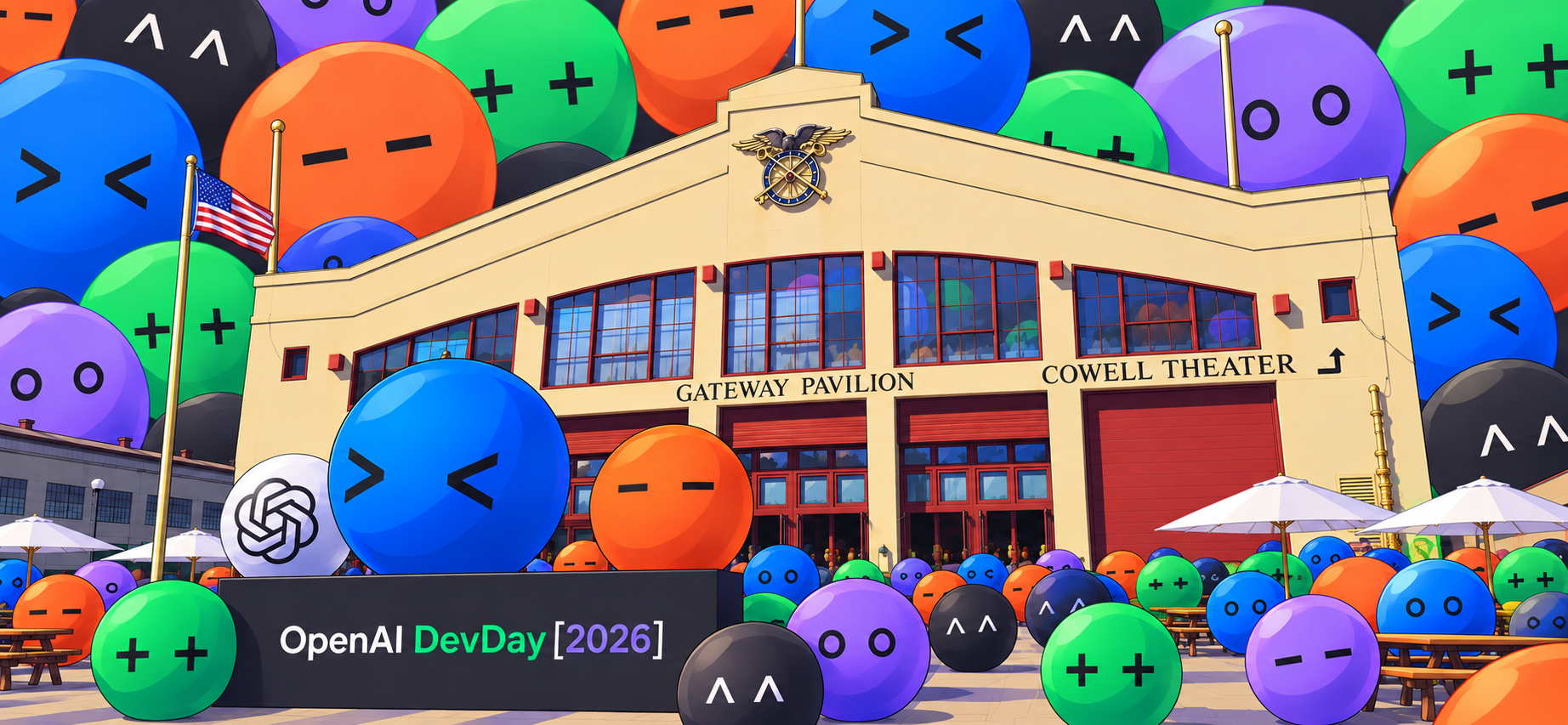
    OpenAI DevDay 2026

    In 2022, I saw the announcement of OpenAI’s DevDay come around, decided that it wasn’t practical this year and that I’d plan to go next year. Then I repeated that for the next two years. But not this year. This year, I finally submitted an application, anxiously waited for approval and booked tickets to San…


CoNtinue Reading

  • Welcome to the third post in my series on Builder’s Library notes. The last posts focused on continuous delivery and monitoring respectively with this entry focusing on techniques for building resiliency. Pieces this time include two high level ReInvent talks focused on building resilient services along with deep dives into ways to handle large traffic…

    Read more

  • Welcome to the second post in my series of Builder’s Library Notes. Last time, I focused on pieces related to continuous delivery. This time, I’m focusing on papers and talks related to Amazon’s monitoring process. These include papers that deep dive dashboard, health checks, and instrumentation as well as a couple about the challenges of…

    Read more

  • Welcome to the beginning of a series of posts meant to serve as my notes on Amazon’s Builder’s Library, a series of white papers and videos detailing some of Amazon’s findings and lessons learned while building distributed systems. This series will cover Builder’s Library’s 23 pieces in its catalog prior to ReInvent 2020. Perhaps my…

    Read more

  • A month ago, I completed my goal of attaining all AWS Associate and Professional level certifications. Despite initially viewing myself as more of a JavaScript and Python program, throughout my career, I’ve ended up deeper and deeper in the AWS rabbit hole, slowly gaining certifications until this year when I took the Solutions Architect and…

    Read more

  • The next data structure, I’ll be looking at is the tree data structure. Similar to a linked list, this data structure is represented by nodes referencing each other and a whole tree can be traversed after gaining access to its root node. The main difference is in shape of the data structure the tree nodes…

    Read more

  • Getting my programming start in Python and JavaScript, I remember wondering what the point of a stack and a queue were. With the power of their current array implementations, it was hard to imagine a list-like structure that could only have elements added or removed from one side. Nevertheless, I’ve found myself solving some coding…

    Read more

  • Going back to basic data structures, I’ve spent a decent amount of time on Hacker Rank’s linked list problems this weekend. While I knew what a linked list was since I first learned about it, it’s been good going through problems using them and reminding myself how to manipulate them or get the information you…

    Read more

  • Sorting Algorithms

    Recently, I’ve been going through MIT’s Introduction to Algorithms and its companion book by the same name to revisit CS basics. This article will serve as a summary my notes from the first 4 lectures which are a deep dive into different types of sorting algorithms and how they compare. I’ll be using the Python…

    Read more

  • Over the course of my coding journey I’ve jumped in and out of JavaScript frameworks such as Angular, React and Vue. All serve a similar purpose as a framework, giving a method of simplifying and organizing JavaScript code and providing functionality with framework specific methods such as Vue’s “v” and Angular’s “ng” prefixes to methods…

    Read more

  • The Facial Keypoints Detection is an image recognition problem with the goal of finding features such as eyes, noses, and mouths on a variety of images. This will be my second attempt at an image recognition problem and this time will be based on finding details in an image as opposed to classifying it into…

    Read more